
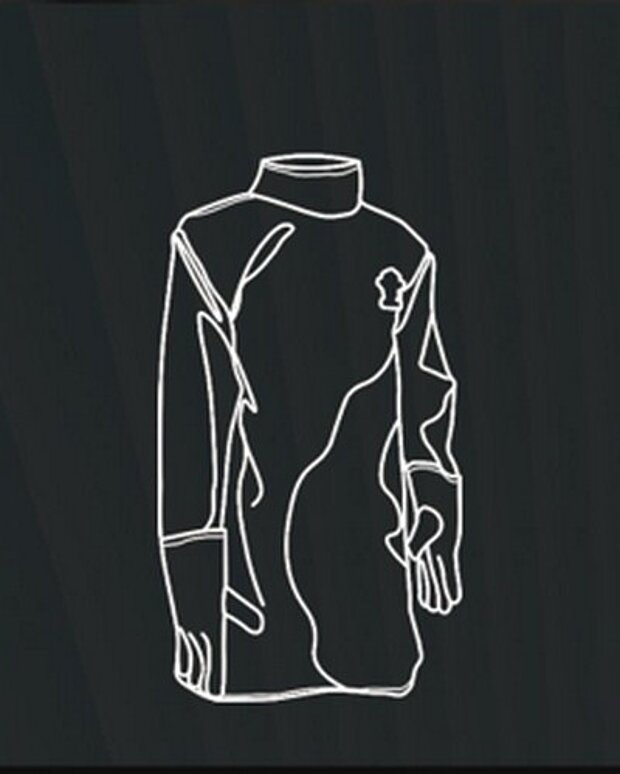
Geen gewone beschermende kleding voor laswerkzaamheden
Geen gewone vlamvertragende en warmte-isolerende kleding.
Laserbeschermingskleding, gecertificeerd tegen directe of diffuse laserstraling.
Speciaal ontwikkelde laserbeschermingskleding: getest volgens de EN60825-4-norm.
Uitstekende vlamvertragende en warmte-isolerende eigenschappen.
De standaard laserbeschermingskleding op de markt is bestand tegen temperaturen tot 200 °C,
terwijl onze PhotonSafe Upgraded Industrial-versie bestand is tegen temperaturen tot 3000 °C.
Laserbeschermende kleding. Laserveilige kleding conform de laserveiligheidsnormen CE/EN 60825-1/4, IEC 60825-1/13, GB 7247.1/4/13.
PBM voor uw lichaam en handen.
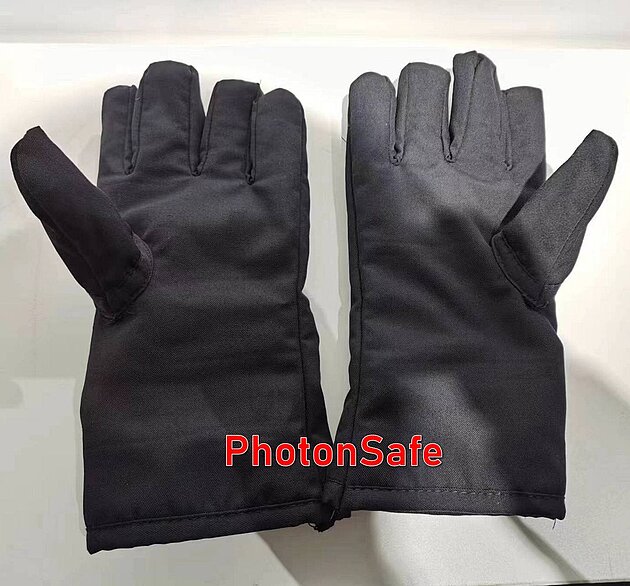
LASER PROTECTIVE GLOVES
Laser Safety gloves+
Laser Protective Performance with 1064nm Laser:
material: inner special fabric with high temperature resistance of 3000'℃ + outer aramid fabric
No Penetration: tested under:
Power density: 300w/cm'
test-power = 83w,
beam diameter = 6 mm,
distance=90mm,
time of test: for 10 seconds)
black/grey colour material
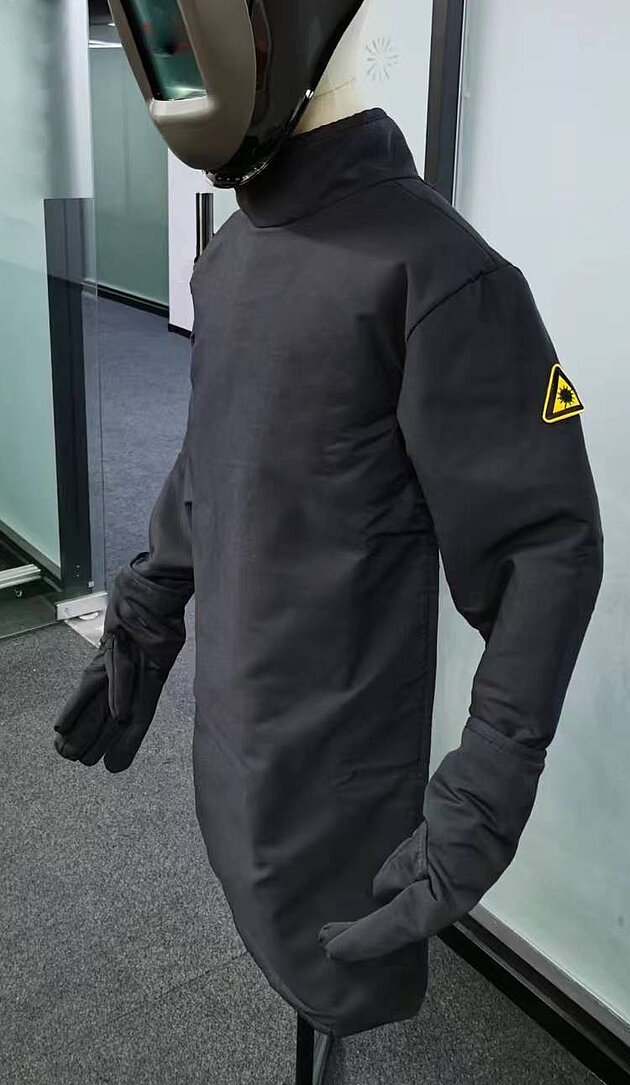
LASER PROTECTING APPRON
Certified Laser-Safe Apron
Because of the increasing application of high-power handheld laser welding systems, this kind of working protection has become more and more important. The Laser Safety Apron employs breathable technology and features certified resistance of 3.000 kW/m² against laser radiation of 1064 nm before exceeding the maximum permissible exposure skin value.
- Suitable for use according to the welding protection standard EN ISO11611
- Suitable for use according to heat and flame protection standard EN ISO 11612
- Tested following laser Standard DIN EN 12254:2012-04
Laserlaskleding samengesteld uit gedeeltelijk aramidevezels
Koolstofvezel versus aramidevezel: alles wat u moet weten
Koolstofvezel en aramidevezel zijn twee populaire soorten hoogwaardige vezels. Ze worden in diverse industrieën gebruikt en staan bekend om hun uitstekende sterkte-gewichtsverhouding, duurzaamheid en weerstand tegen hitte en chemicaliën. Ondanks hun overeenkomsten hebben deze vezels echter duidelijke verschillen die van invloed zijn op hun prestaties en toepassingen. In dit artikel onderzoeken we de verschillen tussen koolstofvezel en aramidevezel en hun voor- en nadelen.
Is aramidevezel hetzelfde als koolstofvezel?
Nee, aramidevezel is niet hetzelfde als koolstofvezel. Hoewel beide vezels worden geclassificeerd als "geavanceerde composieten", hebben ze verschillende chemische structuren en eigenschappen.
Koolstofvezel is gemaakt van dunne strengen koolstofatomen, die strak gebonden zijn en in een specifieke richting georiënteerd zijn. De koolstofvezels worden vervolgens tot stoffen of matten geweven en geïmpregneerd met hars om composietmaterialen te vormen. Het staat bekend om zijn hoge treksterkte, stijfheid en lage gewicht.
Aramidevezel is daarentegen een type synthetisch polymeer dat aromatische ringen in zijn moleculaire structuur bevat. De bekendste vezel is Kevlar, dat wordt gebruikt in kogelwerende vesten, helmen en andere beschermende kleding. Aramidevezel heeft een uitstekende weerstand tegen stoten, slijtage en hitte, maar is minder stijf en sterk.
Koolstofvezel versus Kevlar
Kevlar is een merknaam voor een type aramidevezel dat in de jaren 60 door DuPont is ontwikkeld.
- Het wordt veel gebruikt in ballistische bescherming, zoals kogelwerende vesten, helmen en voertuigbepantsering.
- Kevlar heeft een treksterkte van ongeveer 3,6 GPa (gigapascal), wat vijf keer sterker is dan staal per gewichtseenheid.
Buy your laser safety clothes directly from our online webshop
CERTIFIED Laser welding protective clothing! BUY NOW!
Buy directly from our online webshop