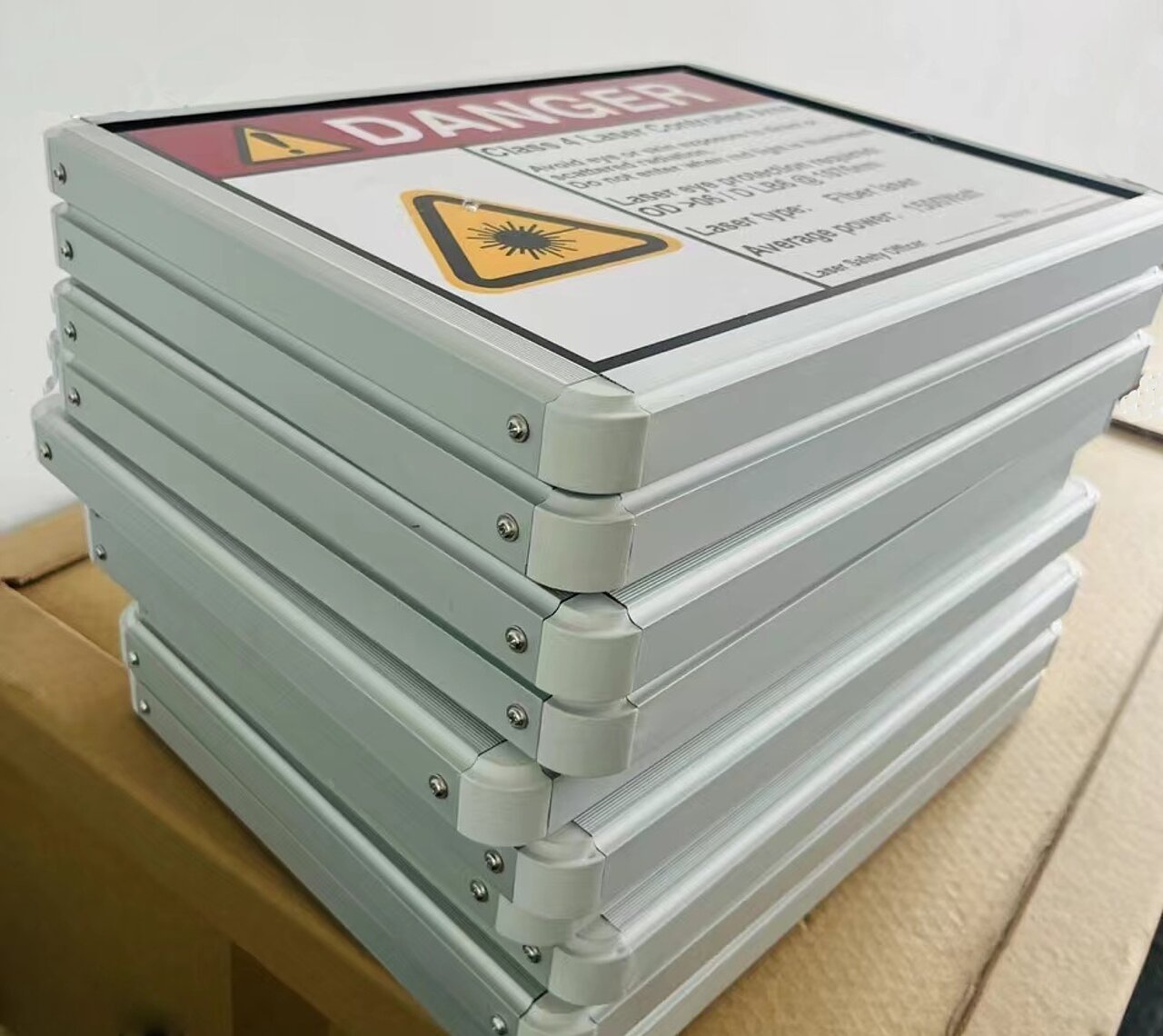

Laser Warning Signs: How to Design, Place, and Use Them the Right Way?
If you work with Class 3B or Class 4 lasers long enough, you learn two things very quickly:
People walk into places they shouldn’t.
A good warning sign can stop that from happening.
As the Lcompany owner you’re the one ultimately responsible for making sure that anyone approaching a laser-controlled area knows what they’re walking into and what they need to do to stay safe. Signs play a huge role in that.
This webpage walks through how to think about laser safety signs: what’s legally and technically required, what actually works in the real world, and how laser class and environment drive your choices.
What a Laser Warning Sign Must Do?
An effective laser warning sign has two jobs:
1: Get noticed
2: Tell people exactly how dangerous the area is and what to do about it
That sounds simple, but it’s where a lot of facilities fall short. You’ll see faded labels, signs hidden behind open doors, or generic “Laser In Use” stickers with no class, wavelength, or PPE guidance.
From a standards standpoint, this is all very clear: laser-controlled areas must be labeled with signs that show the signal word, laser class, hazard message, and key laser parameters like wavelength and maximum output.
At a bare minimum, a compliant sign for a controlled area with a Class 3B or 4 laser should include:
- Signal word (Danger / Warning / Caution)
- “Laser Radiation” plus a hazard statement
- Laser class (e.g., “Class 4 Laser Product”)
- Wavelength and maximum output (and pulse duration if pulsed)
- Any critical instructions (e.g., “Eye Protection Required”)
If one of those is missing, it’s time to fix it.
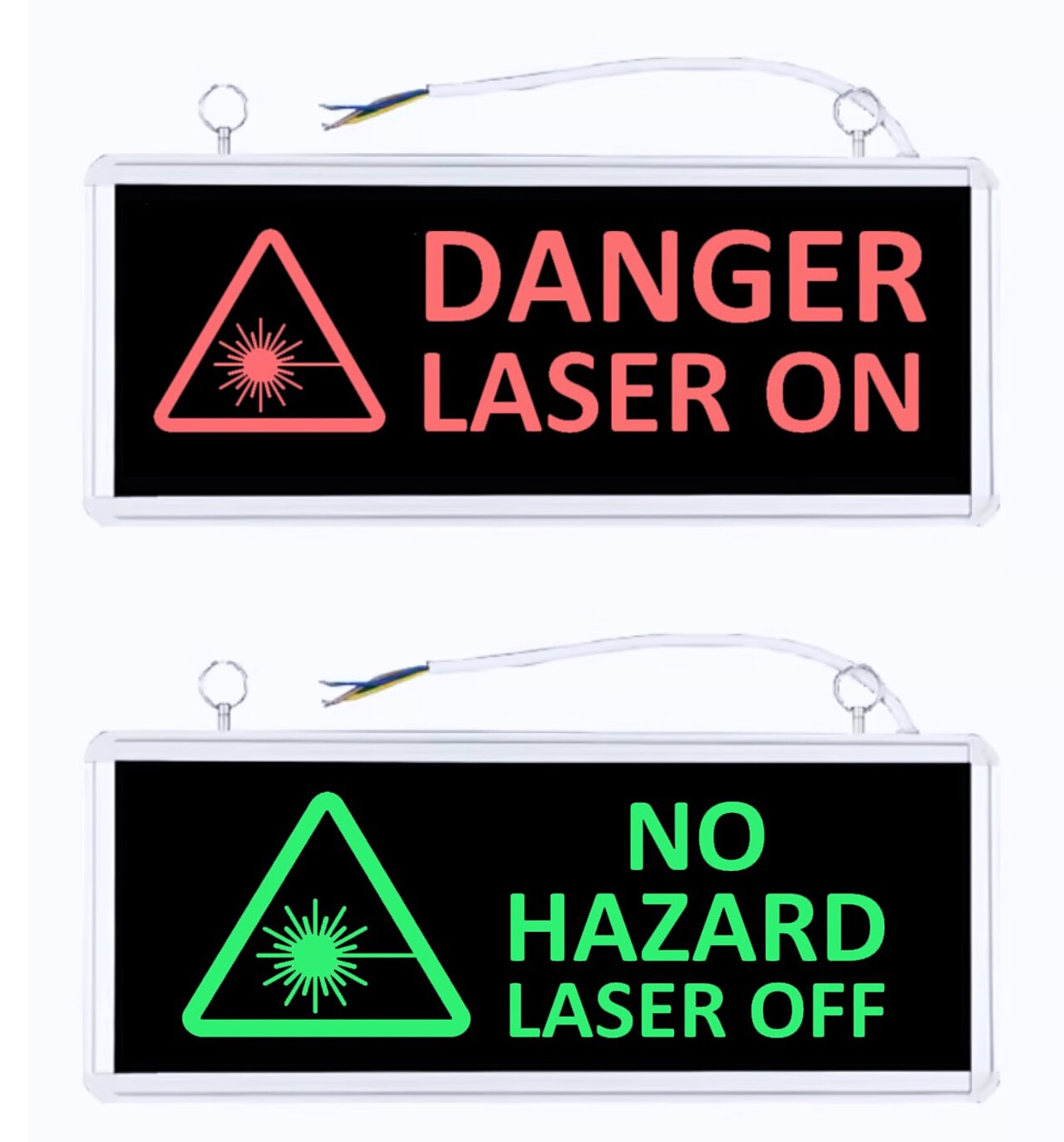
The language and color on the sign are not just “style”; they are tightly controlled by conventions.
Signal Words and Colors: Danger vs Warning vs Caution
The language and color on the sign are not just “style”; they are tightly controlled by conventions.
Danger – Red
- Use it for: Class 4 lasers with exposed or potentially exposed beams, especially when free-space propagation is possible.
- Meaning: Immediate hazard that can cause serious injury or death.
- Example text:
DANGER
LASER RADIATION – AVOID EYE OR SKIN EXPOSURE TO DIRECT OR SCATTERED RADIATION
CLASS 4 LASER PRODUCT
According to healthcare LSO guidance, “Danger” is reserved for the highest hazard situations—typically Class 4 laser areas with accessible beams.
Warning – Orange
- Use it for: Class 3B and some Class 3R systems where exposure can exceed MPE but isn’t as catastrophic as a typical Class 4 scenario.
- Meaning: Serious hazard, but not quite at “immediate death” level.
- Example text:
WARNING
LASER RADIATION – AVOID DIRECT EXPOSURE TO BEAM
CLASS 3B LASER PRODUCT
“Warning” is reccognized as the mid-tier signal word between Danger and Caution.
Caution – Yellow
- Use it for: Class 2, 2M, and 3R systems that can cause injury but normally rely on the aversion response or limited power.
- Meaning: Potential hazard; you still need to behave carefully even if the risk is lower.
- Example text:
CAUTION
LASER RADIATION – DO NOT STARE INTO BEAM
CLASS 2 LASER PRODUCT
The healthcare laser safety curriculum explicitly ties “Caution” to Class 2, 2M, and 3R systems, where irradiance is below MPE or only slightly above, but careless behavior could still cause harm.