
At Lasermach Safety division, we proudly offer a premium range of laser safety glasses and goggles, meticulously crafted for Infrared Laser applications in the industry like laser welding, laser cleaning, laser cladding, laser hardfacing, ..
Our eye protective products are not only designed to provide the highest quality laser protection for your eyes and skin, but they also rigorously adhere to the highest safety standards. Each pair of our Lasermach Photonsafe Safety laser safety glasses meets the stringent ANSI Z136 and EN207
Photonsafe Laser protection Eyeware
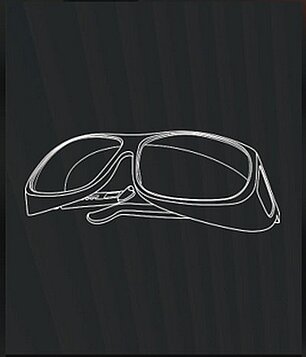
Laser Protection Glasses
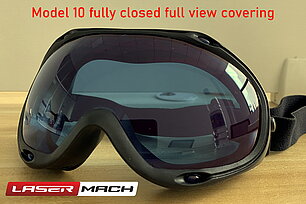
Laser Protection Goggles
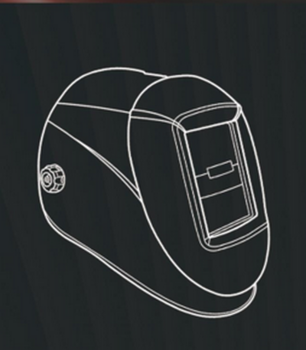
Laser Protection Helmets/Faceshields
Laser Safety Basics – Protecting your Eyes
Our protection products include laser-shielding safety glasses for individual use, capable of preventing degradation of the vision from damage to the retina and negative effects on the eyes.
When used correctly, lasers serve various practical purposes. However, it's crucial for everyone to understand how to safeguard their eyes from high-powered laser beams. Individuals working with potent lasers in scientific, medical, or industrial settings must be well-versed in the associated risks and protective measures.
What makes lasers hazardous?
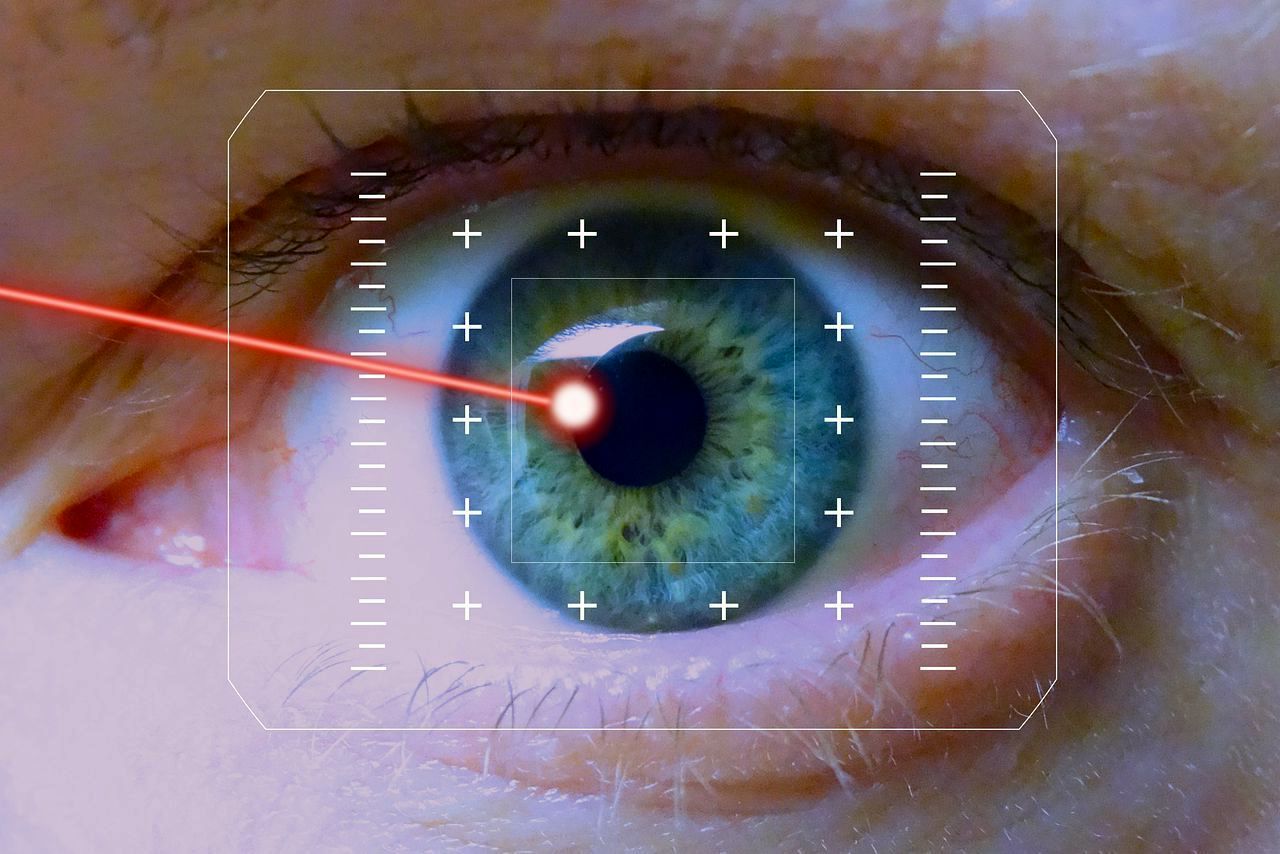
All laser beams carry energy, and when they come into contact with biological tissue such as skin or eyes, this energy is absorbed and converted into heat. The more intense and potent the beam, the more heat it generates. Highly concentrated beams of light can pass through the cornea and lens, focusing even more light, and hitting a small area on the retina, resulting in the destruction of photoreceptor cells. This can lead to temporary or permanent blind spots before the blinking reflex can intervene. Powerful lasers within the visible to near-infrared spectrum can heat the entire retina, while those with wavelengths under 300 nanometers and in the high infrared range can cause photokeratitis or severe burns to the cornea. The lens can also absorb laser beams with wavelengths under 400 nanometers, increasing the risk of cataracts, which can obstruct vision. A broader laser beam can cause temporary flash blindness, similar to exposure to extremely bright light, before the blinking reflex kicks in. Infrared laser light is not visible to the human eye, so it can damage the eye without triggering the blinking reflex. Additionally, laser beams closer to the blue or ultraviolet spectrum can cause harmful photochemical reactions in the eye tissue.
Classification of Lasers
Lasers are categorized based on their strength, with Class 1 being the lowest and Class 4 the highest. Class 3R, 3B, and 4 lasers necessitate the use of laser safety goggles and glasses for protection. The American National Standards Institute (ANSI) has established standards for categorizing lasers according to the risks they pose, which are utilized by the Occupational Safety and Health Administration (OSHA).
Workplace Laser Safety
The presence of a competent laser safety officer within your company is crucial for establishing and maintaining a safe working environment. All employees should be well-informed about the risks associated with laser operation and should not become complacent. Here are some essential laser safety tips:
- Never allow anyone to position their face or eyes at the same level as the laser beam.
- Remove watches, rings, and all other jewelry before entering the laboratory.
- Reduce the power when adjusting and aligning beams.
- Utilize an interlock system to automatically shut down the laser when necessary. Class 3B and Class 4 lasers, which are the most hazardous, typically come equipped with an interlock system.
- Ensure that a Certified Laser Safety Officer is on duty and restrict access to lasers in operation to trained and authorized personnel only.
How to Choose Your Laser Safety Glasses
Laser standards and categories
1, ANSI Z136.1 requires specification of laser safety eyewear according to optical densities (OD). OD is the logarithmic reciprocal of transmittance, expressed by the following: D? = -log10 T ?, where T is transmittance.
2, European laser safety regulations EN 207/EN208 consider Optical Density and also the damage threshold when determining laser safety requirements.
Lasers are categorized by the ANSI Z136.1 standard and IEC CE EN207/EN208 standard into the following general categories.
According to the American laser safety standard ANSI Z136.1 and the International Electrotechnical Commission and the European Union laser safety standard IEC CE EN207/EN208, lasers can be classified according to the following standards.
Class | Definition | Suggestion |
1 | Non-hazardous | Eyewear not required. |
1M | Eye safe visible laser (400-700nm) if used without magnifying optics. | Eyewear not required. |
2 | Eye safe visible laser (400-700nm) (safe within the blink reflex of 0.25s). | Eyewear not required. |
2M | Eye safe visible laser (400-700nm) (safe within the blink reflex of 0.25s) if used without magnifying optics. | Eyewear recommended. |
3R | Likely unsafe for intrabeam viewing. Maximum Permissible Exposure (MPE) is up to 5 times class 2 limit for visible lasers of 5 times class 1 limit for invisible lasers. | Eyewear recommended. |
3B | Eye hazardous for intrabeam viewing. Limited diffuse hazard. | Eyewear recommended. |
4 | Eye and skin hazard for direct and diffuse exposure. Fire and burn hazard. | Eye protection and other personal safety equipment is required. |
Laser Protection Selection Criteria
1, Laser’s specifications: output wavelength, power density
2, Optical Density(OD): Optical Density (OD) is a measure of the attenuation of energy passing through a filter. The higher the OD value, the higher the attenuation
3, Visible Light Transmittance(VLT): VLT below 20% should be used in well-illuminated working environments.
4, Frame: wear or do not wear prescription glasses, face-forming
What means effectively the numbers used in OD (optical density) in laser protection
| Optical Density | Transmission of laser light | Attenuation Factor |
| 1 | 1 | |
| 1 | 0.1 | 10 |
| 2 | 0.01 | |
| 3 | 0.001 | 1000 |
| 4 | 0.0001 | 10000 |
| 5 | 0.00001 | 100000 |
| 6 | 0.000001 | 1000000 |
| 7 | 0.0000001 | 10000000 |
Buy your laser safety clothes directly from our online webshop
CERTIFIED Laser welding protective clothing! BUY NOW!
Buy directly from our online webshop